28,5M€
Wallet
72 502
Number of beneficiaries
83 %
Women beneficiaries
65 %
Rural beneficiaries


Wallet
Number of beneficiaries
Women beneficiaries
Rural beneficiaries


Loan of €2.2M*
(local currency equivalent)
since 2009

The informal sector continues to represent a significant portion of Senegal's GDP. The country is classified as a least developed country (LDC) by the UN, with 501,000 to 300,000 people living below the poverty line. Unemployment affects a significant portion of the population, particularly young people.
The Autonomous Cooperative for Strengthening Economic Initiatives through Microfinance (CAURIE-MF) was created in 2005 by Relief Services (CRS) and CARITAS Senegal. CAURIE-MF operates in over 601,300 rural areas and in 13 administrative regions of Senegal.
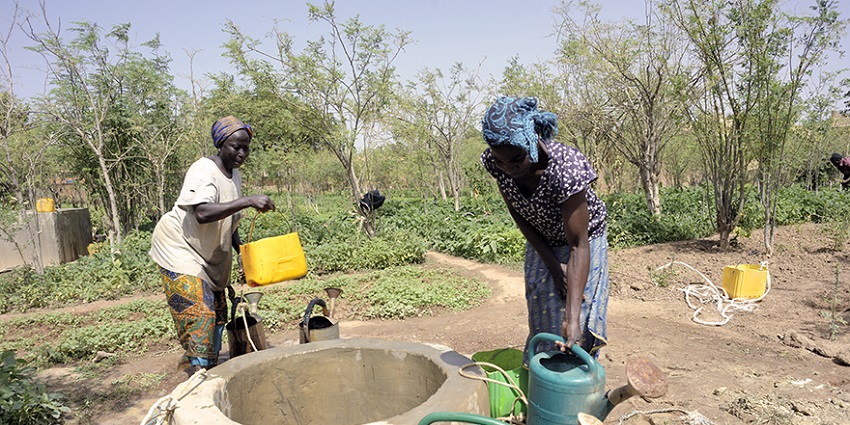
CAURIE-MF makes a lasting contribution to the economic and social promotion of poor micro-entrepreneurs, mainly women, by offering them appropriate financial products and services.
With over 10 years of experience in the microfinance sector, the Grameen Crédit Agricole Foundation finances and supports microfinance institutions with technical assistance. It represents over €200 million in financing, a presence in nearly 40 countries, and more than 85 institutions supported since its inception. With 37% of investments in Sub-Saharan Africa, the continent is at the heart of the Foundation's actions and its mission to contribute to the fight against poverty.
Alongside the European Investment Bank (EIB) and the Luxembourg government, the Foundation will strengthen its support for microfinance institutions in West Africa as part of a new technical assistance program. Both of the Foundation's partners have extensive experience in developing microfinance: the EIB has already committed more than €1.3 billion to the sector since the first microfinance operations in 1992, and Luxembourg accounts for 611,000 million of global microfinance assets under management.
After granting the Grameen Crédit Agricole Foundation a loan equivalent to €12 million in CFA francs in 2019 to support microfinance in West Africa, the EIB has awarded, on behalf of the Government of Luxembourg, a grant of €332,000 to provide technical support to five microfinance institutions supported by the Foundation.
This two-year program will enable the Foundation to support Caurie (Senegal), Kafo Jiginew (Mali), Graine (Burkina Faso), ACEP Burkina Faso, and ACEP Niger to facilitate their digital transformation, improve risk management, and strengthen social performance management. Through this partnership with the EIB and the Government of Luxembourg, the Foundation is expanding its presence in West Africa and strengthening its value proposition to its partners in the region.
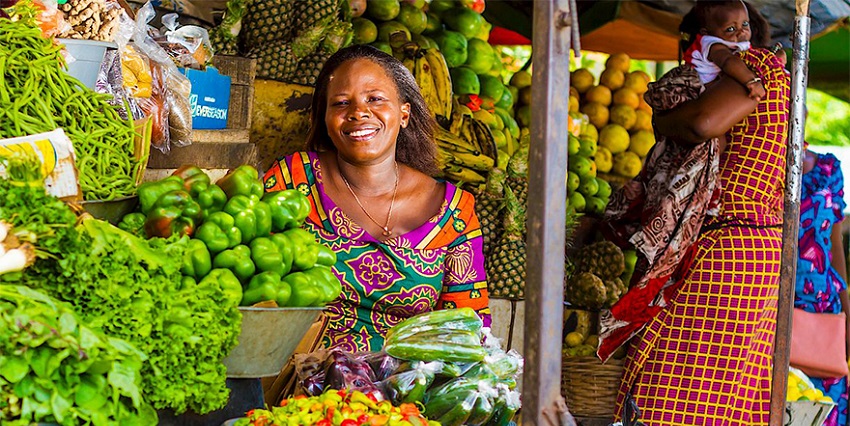
During the first half of the year, the Grameen Crédit Agricole Foundation granted seven new financing projects in sub-Saharan Africa to long-standing partners.
In Benin, the microfinance institution RENACA received a loan in local currency equivalent to €762,000. RENACA is a mutual institution whose mission is to significantly strengthen the economic base of rural populations. To date, the institution has 27,000 clients located in 801 rural areas, including 59.51 women.
In Kenya, the Foundation granted a new local currency loan equivalent to €2 million to the Musoni microfinance institution. The institution makes extensive use of information and communication technologies to manage its activities efficiently and adapt quickly. To date, the institution has 44,000 clients, including 66,313 women and 63,313 rural clients.
In Uganda, ENCOT received a new local currency loan equivalent to €296,000. This loan was granted under the African Facility, a program developed by the Grameen Crédit Agricole Foundation in partnership with the French Development Agency to support small microfinance institutions in sub-Saharan Africa. ENCOT is an institution that offers financial and business development services. To date, the institution has 6,200 clients, including 561,000 women and 88,410,000 clients in rural areas.
In the Democratic Republic of Congo, the Foundation granted a €540,000 loan under the African Facility to the microfinance institution Paidek, whose role is to finance the development of small-scale commercial and livestock activities. To date, Paidek has 15,500 clients, including 511,000 women and 31,210,000 clients in rural areas.
In Zambia, the Foundation also granted a new local currency loan equivalent to €300,000 to the microfinance institution Agora Microfinance Zambia (AMZ), also within the framework of the African Facility. AMZ is a microfinance institution that specifically targets low-income individuals with appropriate financial products. It currently has 37,100 clients, including 581,300 women and 851,300 clients in rural areas.
Finally, in Senegal, the Foundation granted a loan to CAURIE Microfinance in local currency equivalent to €1.14 million. CAURIE's mission is to contribute sustainably to the economic and social advancement of microentrepreneurs. The institution currently has 72,200 clients, including 99% women and 55% in rural areas. A second investment was made in Senegal in the form of a stake in Laiterie du Berger for an amount equivalent to €99,700. Laiterie du Berger, in which the Foundation has been a shareholder since 2010, is a social enterprise that recycles milk collected from Fulani herders in the north of the country, transforming it into yogurts and other dairy products sold under the Dolima brand.
With these new investments, the Foundation brings the amount of its commitments in sub-Saharan Africa to nearly 41 million euros, or 41% of the total amount of the Foundation's commitments at the end of August 2019.
For more information: Supported organizations
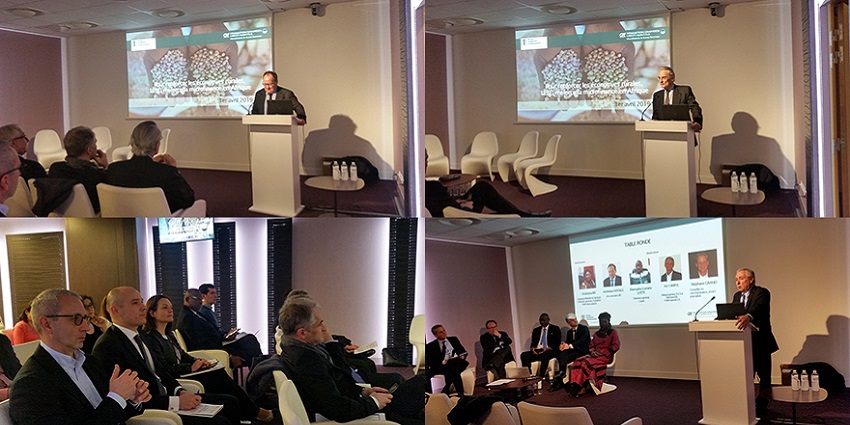
On April 1, the Grameen Crédit Agricole Foundation and the European Investment Bank (EIB) held a roundtable discussion in Paris on the topic of developing rural economies and strengthening microfinance in Africa through the EIB. Representatives of both institutions shared a common goal: promoting a more sustainable and inclusive economy.
Following the EIB's granting of a €12 million loan equivalent in CFA francs to the Foundation to support microfinance in West Africa, this roundtable also provided an opportunity to discuss issues related to the development of rural areas in Africa. Several guests gathered to discuss rural microfinance, agriculture, gender, and climate change.
As Jérôme Brunel, Foundation Administrator and General Secretary of Crédit Agricole SA, recalled in his opening speech, the Foundation has lent more than four times its capital in the space of 10 years, representing €200 million in financing, for a presence in around thirty countries and more than 100 partners supported since 2008. At the end of 2018, the Foundation recorded an outstanding amount of €76 million and supported 75 partners in 35 countries. After excellent results in 2018, this new financing will therefore allow the Foundation to expand its action in Africa in the field of microfinance and support for social entrepreneurship. "With this financing granted to the Grameen Crédit Agricole Foundation, the European Investment Bank confirms its commitment to financial inclusion in West Africa alongside a committed player that has just celebrated its 10th anniversary," said Ambroise Fayolle, Vice-President of the EIB.
Mamadou Lamine Gueye, Managing Director of Caurie Microfinance, a Senegalese microfinance institution partnering with the Foundation and beneficiary of the EIB loan, and Soukeyna Ndiaye Bâ, Managing Director of the INAFI International Foundation and administrator of the Foundation, spoke of the importance of intermediaries such as the Grameen Crédit Agricole Foundation, whose positioning allows it to finance small microfinance institutions that would otherwise not be eligible for funding from major donors. Both agreed to recognize the role of the Foundation and other donors in developing the microfinance sector on the continent, thereby providing opportunities for African youth.
Two institutions have already benefited from the EIB loan to the Foundation: Caurie Microfinance, whose mission is the social and economic empowerment of poor microentrepreneurs in Senegal, primarily women; and PAMF BF, which offers microcredits to finance agricultural and economic activities such as market gardening and grain production in Burkina Faso. These two institutions alone represent more than 110,000 active borrowers, including 79,87% women.
Sub-Saharan Africa accounts for approximately 301,000 million of the Foundation's funding. The Foundation focuses its efforts there on behalf of rural populations, with the aim of strengthening the resilience of the agricultural sector. "The Grameen Crédit Agricole Foundation is now present in a dozen African countries," emphasized Jean-Marie Sander, President of the Foundation. For Eric Campos, General Delegate of the Foundation, "working on agriculture means working on the future of Africa. We must unleash the development of products adapted to the rural world: today, agriculture represents 601,000 million of the continent's workforce. Yet farmers represent only 31,000 million of bank exhibitors!"
In line with the Foundation's work, microfinance is a fundamental pillar of value creation in Africa. This is also what two of our speakers, Flora Helard and Mathilde Thonon, students at Sciences Po Paris and co-founders of In-Venture, observed on the ground. They spent a year in West Africa and Southeast Asia meeting those who find solutions to their communities' social and environmental problems in finance. In particular, they met with two of the Foundation's partner MFIs in Benin: RENACA and ACFB. Their enthusiasm reflects the performance of a dynamic sector that attracts the young entrepreneurs of tomorrow.
The Grameen Crédit Agricole Foundation has received a €12 million loan from the European Investment Bank (EIB) equivalent in CFA francs to support the development of microfinance in West Africa. This funding in local currency is a true recognition for the Foundation, which will be able to expand its presence in Africa.
The EIB has extensive experience in developing microfinance. With over €1.3 billion committed since its first microfinance operations in 1992, it supports microfinance institutions and other sector stakeholders promoting inclusive and responsible finance. Under the Cotonou Agreement signed in 2000 between the European Union and the ACP (African, Caribbean, and Pacific) group of countries, the EIB launched a Microfinance Investment Facility to promote the private sector and combat poverty in West African countries. It was under this program that a €12 million loan, equivalent in CFA francs, was granted to the Grameen Crédit Agricole Foundation.
As an investor, financier, technical assistance coordinator, and fund advisor, the Foundation has been supporting microfinance and social business institutions around the world for 10 years. Ten years later, it has raised more than €200 million in financing, a presence in some thirty countries, and more than 100 partners supported since its inception. In 2018, the Foundation managed €73 million in outstanding loans, and supported 75 partners in 35 countries. Following its successful results in 2018, this new funding will allow the Foundation to expand its work in Africa around microfinance and support for social entrepreneurship.
With more than 30% of financing in sub-Saharan Africa, the Foundation is positioning itself as a committed player in the fight against poverty on the continent. It focuses its action on rural populations to support financial inclusion and strengthen the resilience of the agricultural sector. This alliance between the EIB and the Foundation meets a common objective: to finance and promote a more sustainable and inclusive economy, in line with the Global Development Agenda by 2030. By providing this financing in CFA francs, the EIB allows the Foundation to continue supporting its partners in West Africa with loans in local currency.
Two institutions will already benefit from this joint support: CAURIE MICROFINANCE in Senegal, which contributes sustainably to the social and economic empowerment of poor micro-entrepreneurs, primarily women; and PAM BF in Burkina Faso, which provides microcredit to finance agricultural and economic activities, such as market gardening and grain production. These two institutions have nearly 100,000 active borrowers between them.
"With this financing, the European Investment Bank is confirming its commitment to financial inclusion in West Africa alongside a committed player that has just celebrated its 10th anniversary," explained Ambroise Fayolle, Vice-President of the EIB. "The ability to finance this operation in local currency is a key element in reaching the most vulnerable populations without imposing foreign exchange risk on microfinance institutions. We particularly support the Grameen Crédit Agricole Foundation in its efforts to promote women's employment. It is these values, upheld by Europe, that we are championing today."
"The EIB loan allows us to multiply the action of the Foundation, which concentrates more than a third of its financing in sub-Saharan Africa and is present in a dozen African countries. Africa will continue to be a priority target for the Foundation, which will concentrate more than 30% of its financing in the continent by 2022. Thank you to the EIB for being part of the human and entrepreneurial adventure that Crédit Agricole and Professor Yunus began 10 years ago," said Jean-Marie Sander, President of the Grameen Crédit Agricole Foundation.
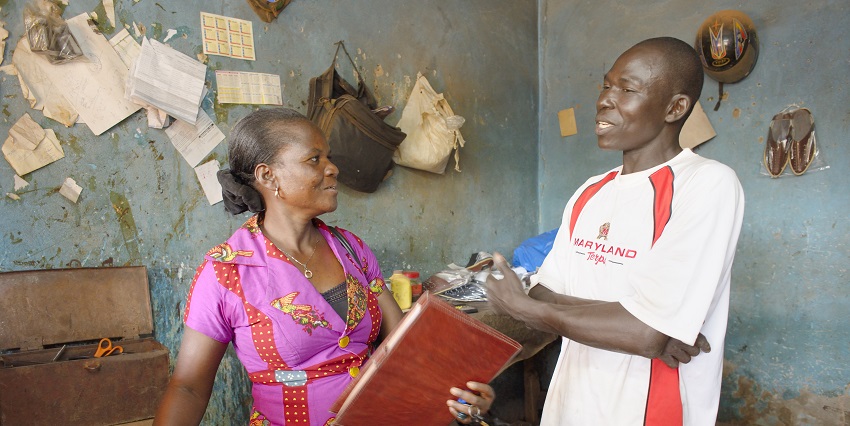
Over the past year, the Grameen Crédit Agricole Foundation has strengthened its presence in West Africa with 8 new financings, including 3 from new partners.
In Mali, the Foundation has funded Kafo Jiginew, a mutual network of savings and credit unions that offers local financial services (savings, credit, microinsurance, fund transfers, and other services) to as many people as possible in Mali to improve their living conditions. The institution currently has 48,000 active clients, including 92% clients in rural areas. The Foundation has granted it a loan in local currency equivalent to €3 million over a five-year period.
In Benin, the Foundation granted a local currency loan equivalent to €1.4 million to a new partner, PEBCo Bethesda, whose mission is to improve people's living conditions by providing quality financial and non-financial services. The institution offers group and individual loans and has approximately 95,000 active borrowers, including 641 women and 331 in rural areas.
In Togo, the Foundation also funded a new partner, Assilassimé, with a loan in CFA francs equivalent to €500,000. Assilassimé is a program created in 2012 by Entrepreneurs du Monde for marginalized people. The institution provides them with financial (microcredit) and non-financial services (training, individualized support, social referrals). It currently has nearly 30,000 clients, including approximately 95,000 women.
In Burkina Faso, the Foundation also made three new investments in 2018 with existing partners, bringing its total commitments in the country to more than €4 million, or €13.81 billion of its commitments in sub-Saharan Africa as of the end of December 2018. ACFIME received a loan in FCFA equivalent to €305,000 over a three-year period. It is a microfinance institution that helps bridge the gap not covered by large MFIs operating throughout the country, as ACFIME's loans have very strong potential for social impact. It currently has 18,600 clients, including €901 billion women. PAMF-BF, for its part, received a loan in local currency equivalent to €1 million over a three-year period. The institution, which has approximately 28,400 clients, is primarily engaged in collecting savings and granting loans in Burkina Faso, in order to help better meet the financial needs of low-income populations within a strengthened framework of protection for its members and users. Finally, ACEP Burkina received a local currency loan equivalent to €1.5 million over a three-year period. Acep is a microfinance institution specializing in financing microenterprises and very small businesses in urban centers and their inner suburbs. The loans granted are primarily intended to finance working capital and investment needs. To date, the institution has 11,000 active borrowers.
Finally, in Senegal, the Foundation granted a local currency loan equivalent to €762,000 to CAURIE Microfinance, a socially responsible and financially viable microfinance institution whose mission is to contribute sustainably to the economic and social advancement of poor microentrepreneurs, primarily women. CAURIE currently has 71,000 clients, including 98% women. The Foundation also granted €100,000 in financing to SFA (Sénégalaise des Filières Alimentaires) in the form of a shareholder current account. SFA is a social enterprise that develops an inclusive value chain based on the production and marketing of rice, and in which the Foundation has been a shareholder since 2013.
For more information on the Foundation's partners, click here.