
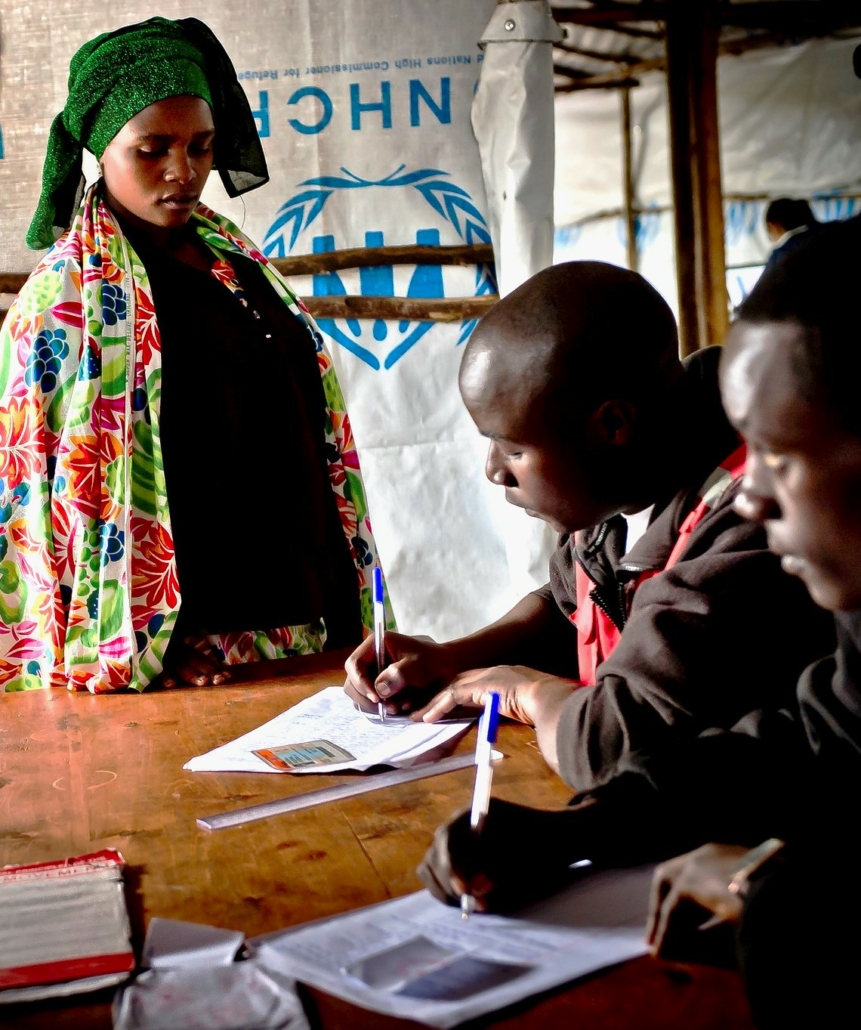
"Financial Inclusion for Refugees" Programme in Uganda: From Concept to Market Development
The Grameen Crédit Agricole Foundation (FGCA), alongside its partner Proparco, is embarking on a new strategic phase of its program dedicated to Financial Inclusion for Refugees in Uganda (2025-2027). This three-year program builds on the lessons learned from a pilot program (2019-2023, co-financed by SIDA) which demonstrated the existence of a viable economic model (or business case) for the financial inclusion of refugees.
Based on Proven Results
The pilot program demonstrated that refugees have consumption patterns similar to other populations and engage in sustainable economic activities, thus contradicting the idea that they are "unbankable." Based on these results, GCA and Proparco are now aiming to develop this emerging market.
Programme Objectives
The main objective is to build on promising results to refine interventions and prepare for broader market expansion by identifying other financial service providers (FSPs) that could be candidates for private sector investment. The programme aims to improve sustainable livelihoods and market viability for refugees and host communities.
Approach and Implementation
The FGCA uses a blended finance approach (debt and technical assistance, or TA) with its two implementing partners: UGAFODE Microfinance Limited and Vision Fund Uganda (VFU). These institutions bring essential local expertise and proven experience working with vulnerable populations.
Technical assistance is structured around three main areas:
- Training and capacity building for PSF staff and clients.
- Development of digital/ICT products and distribution channels to reduce costs and improve access.
- Learning and knowledge sharing (regional and international forums) to advocate for refugee financing as a viable market.
The essence of this approach is to demonstrate the commercial/economic viability of the refugee segment in order to unlock commercial investment and institutionalize this market. This requires patient, low-cost capital, flexible, risk-reducing capital, and catalytic financing.
Towards a Sustainable Financial Inclusion Ecosystem
This project aims to trigger a sustainable financial inclusion ecosystem for this underserved segment, including not only humanitarian partners, but also other actors in the financial sector and private investors. The objective is to integrate the refugee market into the global financial inclusion ecosystem, thereby shifting the focus towards the Development component of the Humanitarian-Development-Peace (HDP) nexus.
For more details, discover the full article by clicking here.